
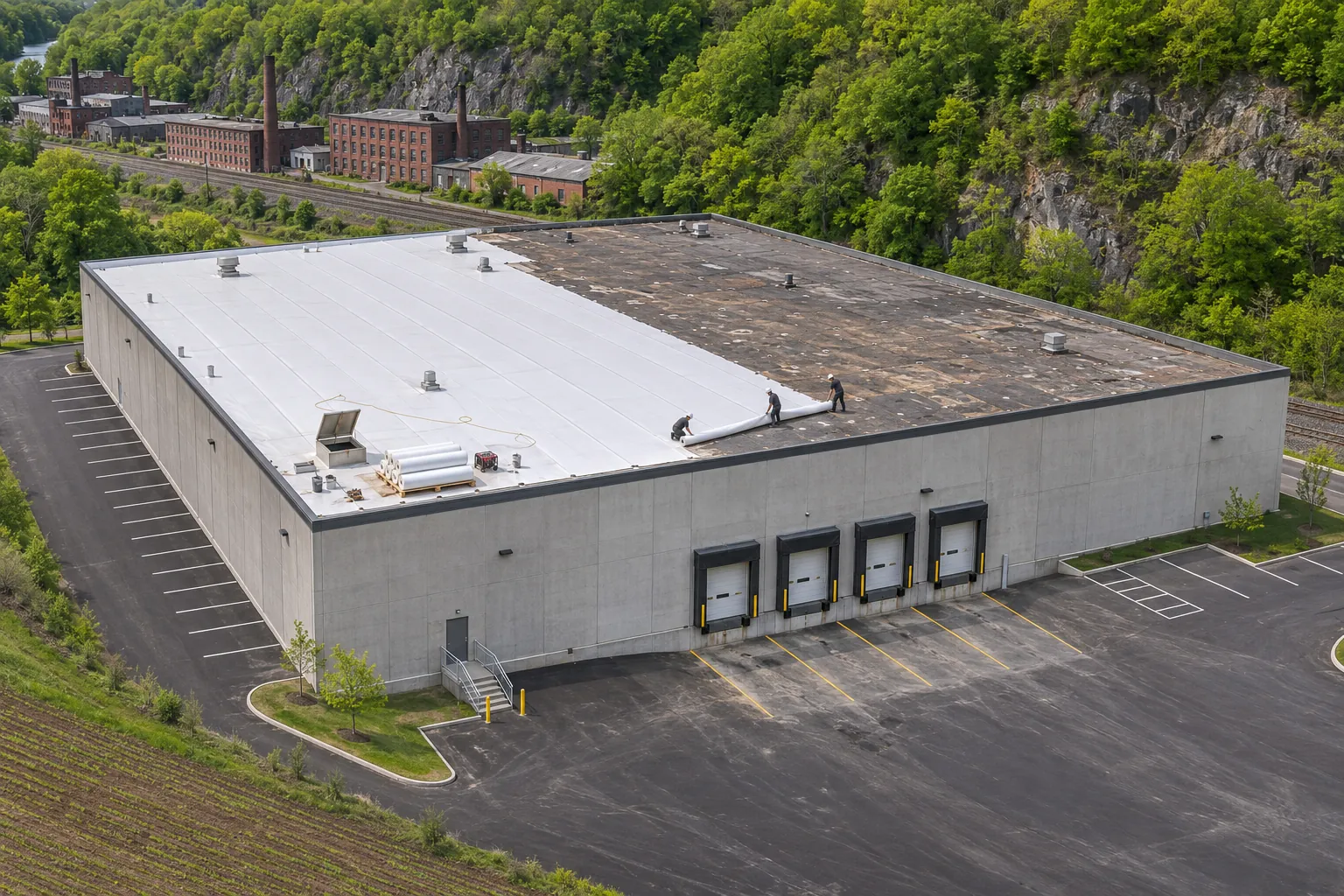
Easton Commercial Roofing Contractor
New Roofs for Warehouses, Plants, and Church Halls
As an Easton commercial roofing contractor, we tear off and install TPO, EPDM, industrial, and metal roofs on business buildings. Every job starts with a walk on your roof.
- First VisitCore Cuts Before Any Price
- SystemsTPO, EPDM, Metal Panels
- Written ScopeLayers, Deck, Every Curb
Commercial Roofing Problems in Easton, PA Buildings
Easton commercial roofing work usually starts with something a tenant or manager notices indoors. Each sign below points to a roof detail we check before any system is named.
Stained Ceiling Tiles
Brown rings spread across the drop ceiling after a soaking rain, often well away from the spot where water entered.
Open Laps and Seams
Field seams that have let go carry water sideways along the deck before it drips through a tile joint below.
Cold Spots Near the Roof Deck
Heating runs longer in one bay, and the ceiling there feels damp or smells musty in January.
Wet Insulation Under the Sheet
Soaked board loses its value and stays wet for years, so a core cut shows how far the moisture has spread.
Drips at Interior Drain Lines
Water shows up along the leader pipes inside the building, usually during a thaw or a hard storm.
Ponding Rings Around Outlets
Low decks and crushed insulation hold water around the drain bowl, and the membrane there wears faster.
Leaks Over Production Lines
Plant staff tarp equipment under the same three spots every season, and patches keep moving the drip.
Cracked Curb Flashing
Rooftop units, exhaust fans, and pipe supports pull on their flashing as they vibrate and heat up.
Damp Brick Inside Parapets
Plaster bubbles and white salt lines appear on the top floor walls of older riverfront buildings.
Loose Coping and Wall Flashing
Gaps at coping joints let rain run behind the base flashing and down the inside face of the wall.
How a Commercial Roofing Job Runs in Easton, PA
Five decisions set every reroof we do. They come in this order, and each one is settled on the roof before the next.
Inspect Your Roof
We walk every section, open core cuts at the field and the edges, and photograph curbs, drains, and coping. The cores show each layer, its thickness, and whether the insulation is dry.
Repair Or Replace?
Wet area, deck condition, and the number of existing layers decide whether a section can be recovered or has to come down to the deck. That call is written down section by section.
Which System Fits?
TPO, EPDM, or standing-seam metal is chosen for the slope, the traffic on the roof, and what runs below it. Equipment and exhaust exposure narrow the choice on plants.
How Is the Building Protected?
Removal is split into areas that can be closed before the crew leaves. Interior protection, crane picks, and dock access are planned with the manager before tear-off starts.
What Gets Checked at Closeout?
Seams are probed, flashing heights are checked at every curb, and drains are run with water. You get the photos and a plain list of what was installed where.
Commercial Roofing for Easton Riverfront Brick Warehouses
A new roof on an old building pays off in specific places. These are the gains owners see once the right assembly goes on.
Dry Insulation
Replacing soaked board restores the thermal value the building paid for when it was first roofed.
Water Reaches Drains
Tapered insulation and crickets move water to the outlets that used to sit high and dry.
Taller Curb Flashing
Every unit and fan gets base flashing high enough for the new roof thickness.
Tight Wall Edges
Coping, counter-flashing, and edge metal are renewed with the field, so perimeter water stops.
Fewer Field Seams
Wide TPO and EPDM sheets cut the number of laps an older roof carried.
Marked Service Paths
Walkway pads guide technicians from the hatch to each unit without crossing open field membrane.
A Clear Record
Core results, layer counts, and closeout photos stay with the building for the next owner or insurer.
Ready for Winter
Drains, gutters, and edges are set up so snowmelt has a path off the roof.
Water Coming Through the Ceiling Tiles?
Call before the next storm. We will set a time to walk the roof, find where the water enters, and tell you whether a repair holds until the full job.
(484) 978-7949Call UsEaston Commercial Roofing Systems We Install
Four roof systems cover nearly every low-slope and metal building in the area. Pick a tab to see where each one fits and where it falls short.
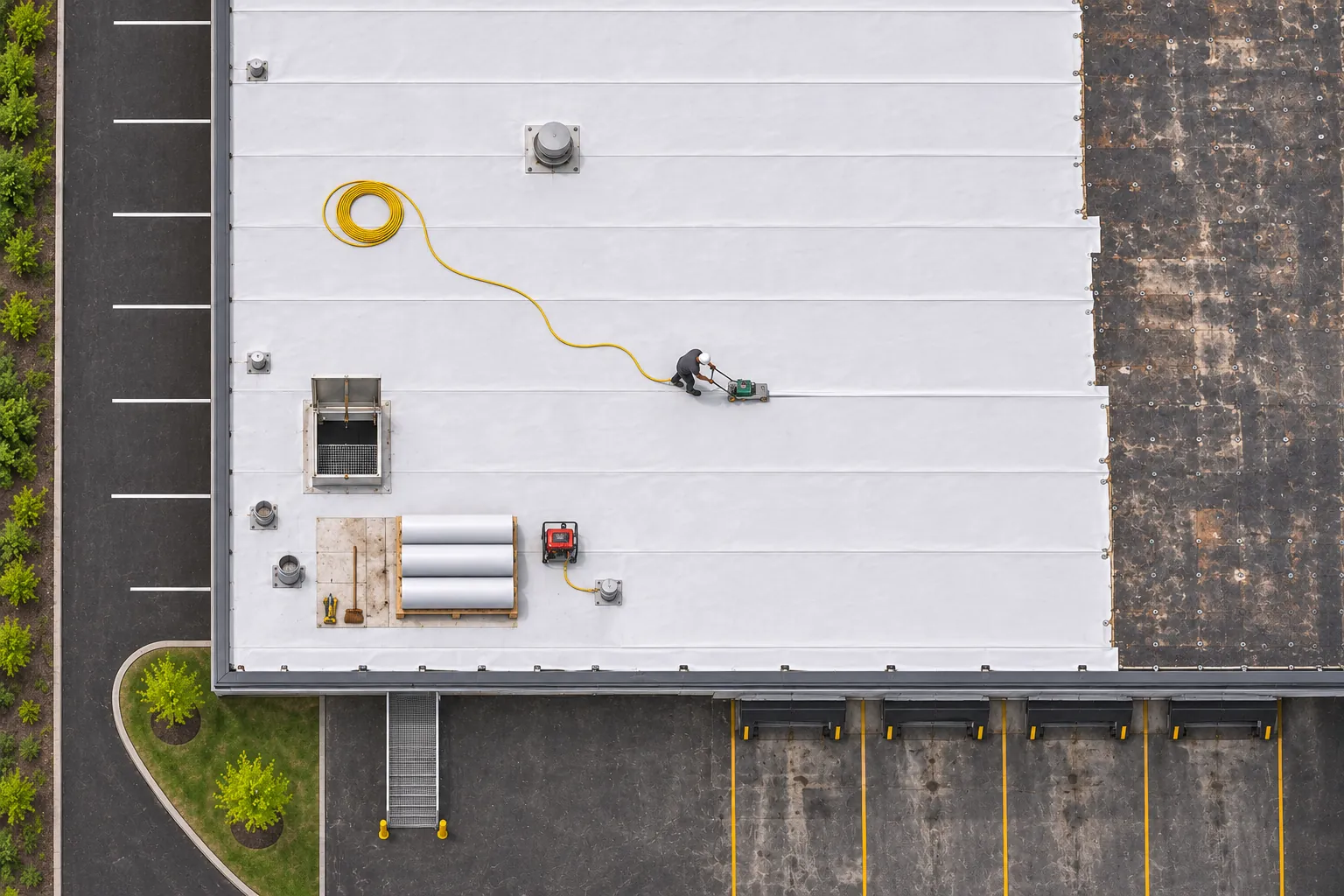
TPO Roofing
White TPO sheets are mechanically fastened or adhered over new insulation, and every seam is welded with hot air into one continuous membrane. Warehouses with big open fields and lots of sun are where it earns its place.
- Distribution warehouses with wide, simple fields
- Recovering one dry existing layer
- Buildings that want a white surface
- Roofs with constant grease or oil exhaust
- Decks that are wet through and need full removal first
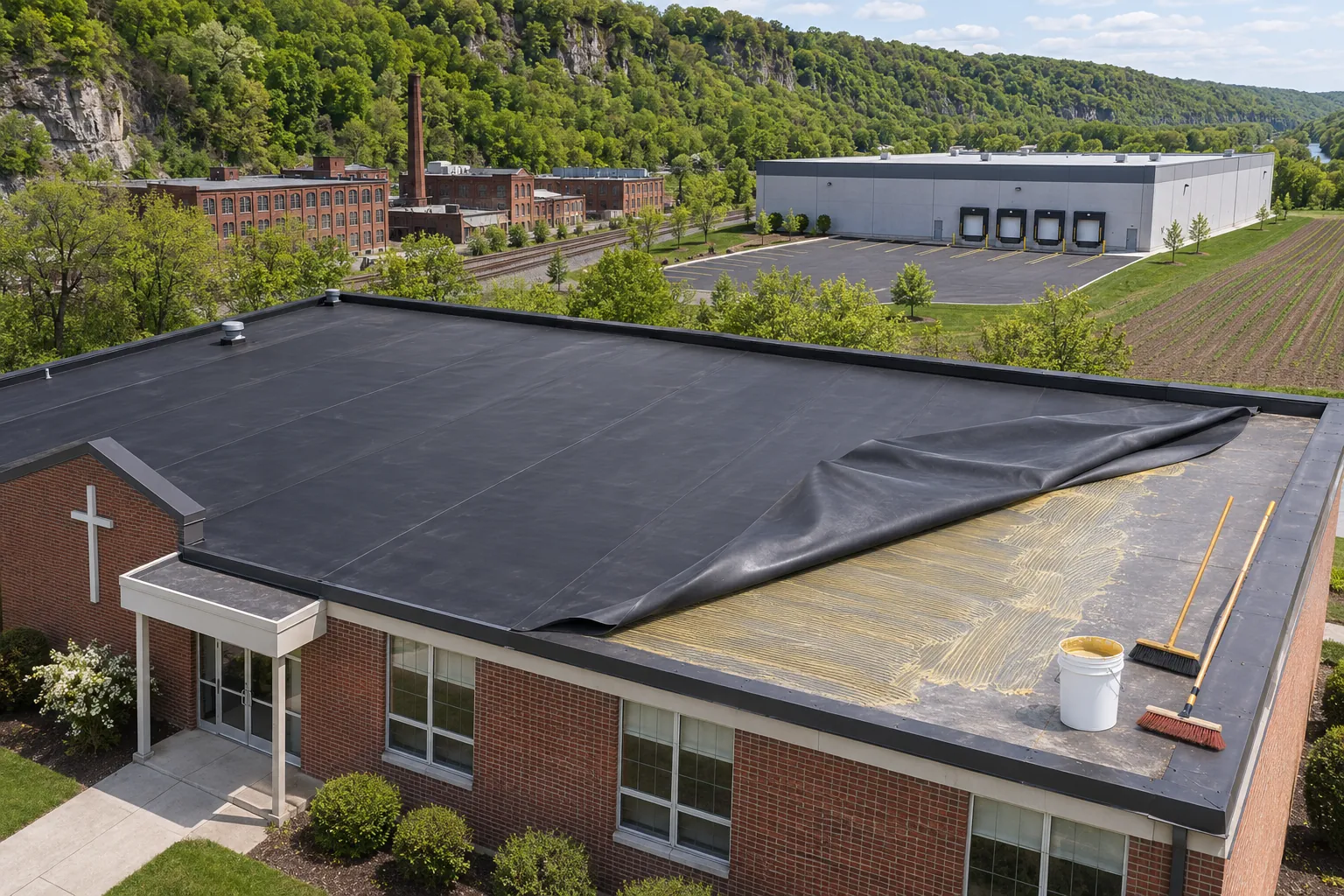
EPDM Roofing
Black EPDM rubber goes down in large sheets glued to cover board, with taped laps and pre-formed flashing at corners. It stays flexible through cold snaps and suits church halls, offices, and older brick buildings.
- Church halls and offices with many penetrations
- Roofs that see hard freeze-thaw cycles
- Owners used to rubber roof upkeep
- Roofs with heavy foot traffic and no walkway plan
- Areas under constant exhaust discharge
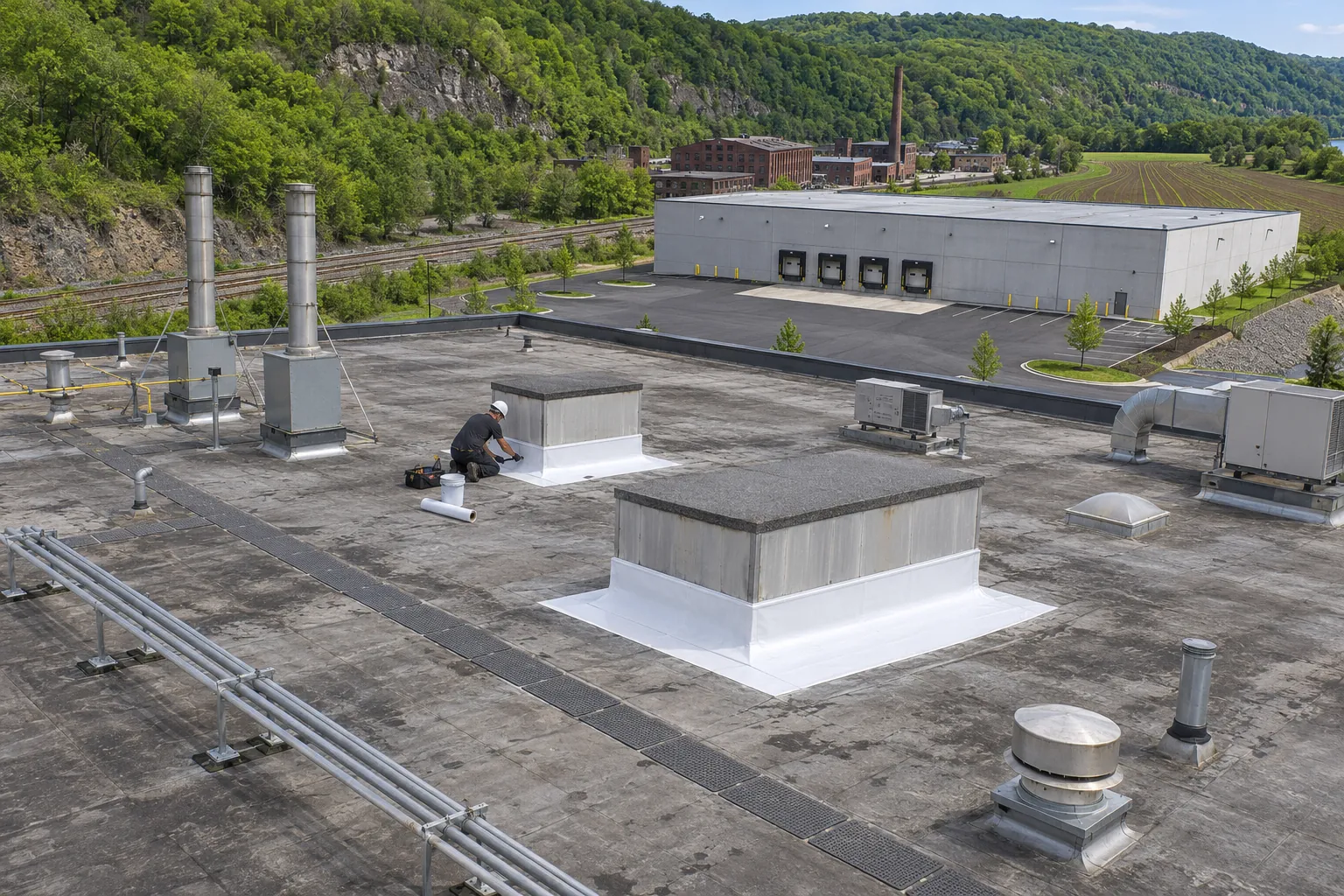
Industrial Roofing
Plant roofs carry exhaust stacks, ducts, pipe racks, and frequent technician traffic. We pick the membrane and flashing for that exposure and stage tear-off in sections above live production.
- Packaging and manufacturing plants
- Roofs with dense rooftop equipment
- Buildings that cannot stop production
- Sections where process equipment must be relocated first
- Decks with unresolved structural damage
Commercial Metal Roofing
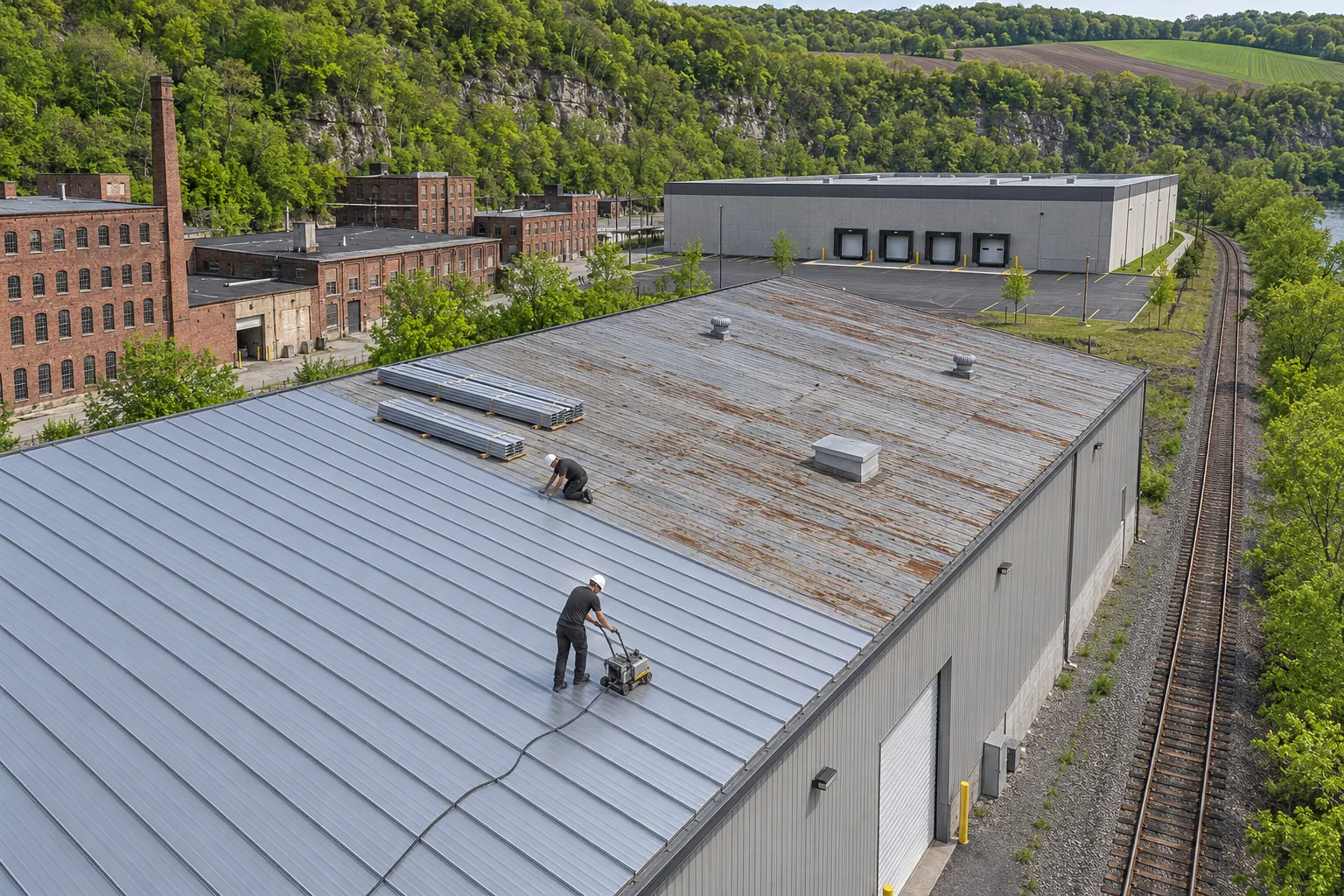
Standing-seam panels go on new framing or over a sound old metal roof, clipped so the steel can move with temperature. Steel buildings and low-slope roofs given new pitch are the usual fit.
- Steel shops and pre-engineered buildings
- Retrofits that add slope over a flat roof
- Rusted exposed-fastener roofs
- Supports that have not been checked for added load
- Short-term fixes on a building being sold
Best Commercial Roofing Options for Easton Buildings
Match the system to the building type first. The table shows where each system usually starts on local roofs.
| Building | Usual Starting System | What We Check First | Watch Point |
|---|---|---|---|
| Distribution warehouse | TPO over new tapered insulation | Wet area by core cut | Dock doors stay open during tear-off |
| Riverfront brick warehouse | EPDM or TPO with new coping | Interior humidity and wall flashing | Condensation under the new roof |
| Packaging or food plant | TPO or EPDM with walkway pads | Exhaust contact and curb heights | Removal over active lines |
| Church hall or school wing | EPDM with pre-formed flashing | Occupancy schedule and access | Services and events on site |
| Steel shop or pole building | Standing-seam metal | Purlin condition and fastener rows | Load path for any retrofit framing |
Serving Easton And Five Nearby Towns
Is your building in one of the towns below? We install commercial roofs in each of them. For a property anywhere else, call us or send us a message.
Easton
Home BaseWarehouses, plants, and brick commercial blocks along the rivers, with church halls and school wings in the neighborhoods.
Morrisville
Storage and distribution buildings where we map wet insulation and deck damage before a system is chosen.
East Stroudsburg
Older parapet buildings where coping joints get rebuilt along with the new membrane.
Wilson
Shops and small plants with rooftop equipment that gets raised when new insulation thickens the roof.
Clifton Heights
Retail strips with shared walls, reroofed one tenant space at a time.
Folcroft
Industrial properties with several buildings, each reroofed on its own schedule.
Commercial Roofing Questions From Easton, PA Owners
Short answers to what owners and facility managers ask most before they replace a roof.
What Is Considered Commercial Roofing?
Any roof on a business, institutional, or industrial building, from the deck up. A church hall counts the same as a warehouse: we look at the covering, insulation, drains, and every connection as one assembly. The building’s use changes how access and protection are planned, and the roof condition underneath still gets checked.
Is Commercial Roof Replacement in Winter Possible in Easton?
Yes, when the crew can reach the roof safely and the deck under each section is dry. We confirm the cold-weather limits of the chosen materials and open only what can be closed that day. Ice at gutters and drains, plus changing snowmelt paths, decide which sections go first.
Can Commercial Roofing Cost per Square Foot Set My Price?
Only as a rough starting point. Area, system and thickness, insulation, tear-off layers, deck repairs, edge metal, flashing, and equipment all move the number. Access, staging, and the season change it again, so the price comes from an inspection of your building and the assembly proposed for it.
What Should I Compare Between Two Roofing Proposals?
Line up removal limits, the assembly specification, and who handles each equipment connection. Then compare the allowances for deck damage, insulation replacement, and protection inside an occupied building. Two bids for the same square footage can describe very different jobs once preparation and staging are written out.
Can Indoor Humidity Ruin a New Roof on a Brick Warehouse?
It can if the moisture source stays. Warm, damp air leaking up from an old brick building condenses under the new membrane and wets the insulation from below. We check for air leaks and condensation along with rain entry at the walls before the scope is final.
Does a New Roof Change My Insurance Coverage?
Plan the project without counting on it. Coverage and premiums come from your policy and the insurer’s own review, including how they treat earlier damage. We can supply the inspection findings and the roof specification for your agent to review.
Hire an Easton Commercial Roofing Contractor
Send the property address and a few lines about the roof. We will walk it, cut cores where needed, and write up the system that fits the building.